
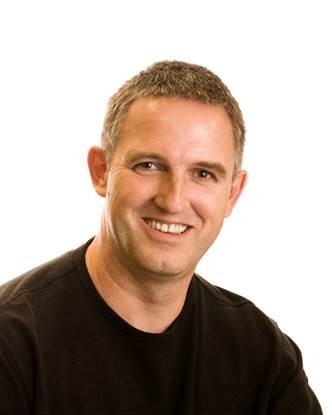
Welcome to PR Vibes™, created by Calysto Communications to provide you with key insights into the publications and events in the telecommunications industry. Today, we’re featuring an interview with Iain Gillott, the founder and president of iGR and iGR Semiconductor Research. Gillott has been involved in the wireless industry, as both a vendor and analyst, for more than 22 years. Before founding iGR, Gillott was a group vice president in IDC’s telecommunications practice. Prior to joining IDC, he served in various technical roles at EDS (now HP). Enjoy!
Since we’ve covered iGR in the past, let’s start with some new stuff. Any interesting trends that you foresee on the horizon?
I think there are three main trends that the wireless and mobile industry will have to contend with in the next few years and these will change the ecosystem’s perception of “value”:
I understand you recently did a survey of the telecommunications and mobile industry about the trends in research. What did you learn?
iGR and Calysto recently surveyed PR, marketing and research professionals in various companies around the world. We had been planning this survey for a while and the results did not disappoint. On the research side, we found that people want (and value) end-user surveys and fact-based forecasts. Secondly, customers also value analyst firms with deep experience in the industry – I believe this is a backlash against the Internet in some respects and all of the unexperienced bloggers and commentators out there. iGR is able to support both of these needs well – we conduct extensive end-user surveys for our research and we have been in the industry (collectively) for about 35 years.
What types of services do you provide?
iGR offers a full range of research services:
What sets iGR apart from other firms?
We differentiate on three things:
What can you tell us a about iGR? How did it come about?
iGR was founded in December 2000 as iGillottResearch to research specifically the wireless and mobile industry. At the time, wireless and mobile meant the mobile operators (of which there were many!), the infrastructure and solution vendors (lots of those as well) and the few handset OEMs. Since then, there has been significant consolidation in the carrier and infrastructure vendor space, but new infrastructure vendors, device OEMs, application developers, and content providers have emerged. In addition, the number of companies interested in wireless and mobile technologies has expanded exponentially. So the audience for our research has expanded significantly as well.
What’s your technology/market focus?
Easy – wireless and mobile! We tend to not look at semiconductors as much, but we do look at most other aspects of the industry. In 2013, we have researched a wide range of infrastructure technologies and issues and have published studies on femtocells, metrocells, picocells, DAS, Wi-Fi offload, mobile bandwidth demands, het-nets, mobile virtualization, LTE advanced, LTE carrier aggregation, LTE infrastructure capex and opex, and LTE broadcast.
We have also conducted in-depth research on the global smartphone and tablet markets for some years, and have always studied the mobile operators and their competitiveness in the industry. For example, in 2013 we published studies on Net Promoter Scores (NPS) for both the U.S. mobile operators and the major smartphone and tablet OEMs.
Who is your target audience?
Simply, those that wish to understand more about the wireless and mobile industry. Typically, we do not sell to end users but we do target infrastructure vendors, mobile operators, broadband service providers, solution vendors, application developers, cable MSOs, OTT providers and anyone else providing solutions in the wireless industry.
How many analysts are associated with iGR and what do they cover?
Right now we have five people working at iGR and all are engaged in some aspect of the research. Matt Vartabedian and I are the main analysts and guide the research. We usually divide up a specific project or study, and have different people work on the various components. To keep from getting stale, we do not dedicate specific analysts to specific technologies or segments of the wireless and mobile industry. This way, everyone gets exposure to multiple aspects of the industry.
Can you share with us your future growth plans?
Growth for iGR is very simple – expand the audience we market and sell to. We plan to keep researching the wireless and mobile industry; that is what we are good at. For the last two years, we have worked hard at expanding our marketing and it has worked – we have three times as many clients now as we had in 2011.
So, I do not expect major shifts in what iGR researches (although of course we will keep up with new emerging technologies), but you can expect to start to see more of iGR in the media. For 2014, we are planning to take a deep dive into the costs associated with small cells and hetnet deployment, as well as continue to look at the emerging mobile virtualization space.
As an analyst, how much value do you place on information that you get via social media channels, such as blogs and Twitter?
OK, so let’s get this out of the way – I am old! I love technology, but initially didn’t see the attraction of the social media apps/services. Twitter is a good example; I really do not see the need to know what some people (so called “stars” for example) are eating for breakfast. Personally, I do not use Twitter at all. And I only got a Facebook account to keep an eye on my teenagers . . . then they both “de-friended” me! And, I’m not that interested in “re-connecting” with people I knew 25 years ago. The friends I have, I have known for a while. Plus, I travel a lot for business and have more than enough to do at home. A Facebook-addiction would just mean a lot of wasted time. However, my kids are both Instagram users and they keep showing me photos and videos of stupid stuff! I find it interesting that they have almost entirely left Facebook in favor of Instagram. My daughter is now in college in the UK so we have become big Whatsapp and Instagram users – much easier to communicate that way than by phone! That said, our company does use Twitter. We put out daily tweets on all our research and actually have quite a few followers. LinkedIn is different. I use that a lot to find people who are knowledgeable about the industry and generally find it very productive and useful. Plus, I get more than 20 invites from people every week and iGR uses it to send out notifications on new research, studies, and things like that.
On a personal note, how did a graduate from the University College of North Wales end up in Austin, Texas?!!! Can you tell us a bit about your hobbies and interests? Any good book recommendations?
As anyone who hears me speak for 30 seconds can tell, I am a Brit! I actually came to the States 25 years ago with EDS for a training course and I ended up staying, met my wife, had a couple of kids . . . the rest is history J Hobbies include cycling (road and mountain), CrossFit, cars (I change the oil myself. Nothing better than getting dirty under an old car), and keeping up with my kids’ basketball schedules. Plus, I am the pool guy, maintenance guy and part-time yard guy for the house. I tend to watch movies and TV series on planes or in the evenings to get some peace and quiet and I watch live TV perhaps twice a year.
Good books? “A brief History of Time” by Stephen Hawking; “When Angels Wept: A What-If History of the Cuban Missile Crisis” by Eric G. Swedin; and any of the Jack Reacher series by Lee Child. Right now, I am reading “Making Aston Martin” by Ullrich Bez.
Closing thoughts?
We like to have fun. The wireless and mobile industry is very dynamic and challenging, and is therefore an interesting industry to be in. We like that and we enjoy what we do. Sometimes you just have to sit back and smile!
© 2026 Calysto Communications
Privacy Policy